Article: Is a Shopping Cart Cushion for Babies Worth It?

Is a Shopping Cart Cushion for Babies Worth It?
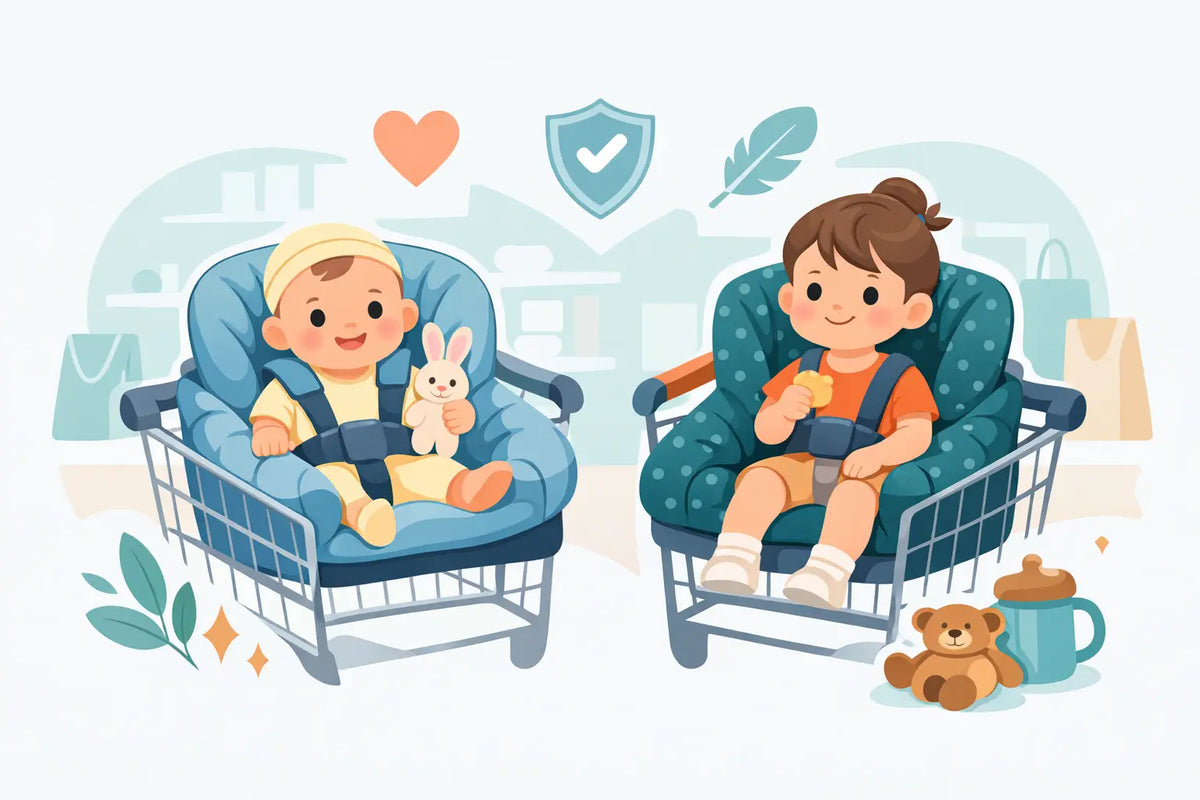
The hard plastic seat at the front of a grocery cart was designed to be washable and durable, not especially comfortable. For a baby or toddler who is still building trunk control, even a quick grocery run can mean sliding, leaning, fussing, or trying to escape the seat. A shopping cart cushion for babies gives little riders a softer, more supportive place to sit while helping parents handle an everyday errand with more confidence.
Why standard shopping cart seats can be tough on little ones
Most shopping cart child seats are a one-size-fits-all solution. They are firm, open around the sides, and made for repeated use by children of many different sizes. While the cart's built-in restraint helps keep a child in position, the seat itself may leave smaller babies and young toddlers with little cushioning or side support.
That can show up in small but familiar ways: a child shifts constantly, leans to one side, cries sooner than usual, or wants to be held before the shopping list is finished. Those moments do not mean a parent is doing anything wrong. They simply reflect the fact that a hard cart seat is not shaped around a growing child's comfort needs.
A cushion is not meant to turn a cart into a nap space or replace the cart's safety features. Its job is much more practical: add soft support where the cart seat feels hard and help create a more comfortable sitting position for a child who is ready to ride in the cart seat.
What a shopping cart cushion for babies should do
The most useful cart cushion focuses on three simple needs: comfort, support, and safety-minded use. It should create a softer barrier between your child and the cart, provide a more secure-feeling seated area, and work with the cart's existing safety belt rather than getting in its way.
Add soft support without making the seat complicated
A well-designed cushion helps soften the firm bottom, back, and sides of a standard cart seat. This matters during longer errands, when a child has already been sitting through a drive or when you need to visit more than one store.
The goal is not excessive bulk. A cushion that is too thick may fit poorly or interfere with the cart belt. Look for a shape that adds comfort while still allowing your child to sit naturally and securely in the cart's designated child seat.
Help smaller riders feel more settled
Babies and toddlers do not all fill out a cart seat the same way. A younger rider may have extra room around the hips and sides, while an older toddler may mainly need relief from a hard backrest and seat base. Supportive cushioning can reduce some of that open, slippery feeling and help a child stay more settled as you move through the store.
It depends on your child's size, developmental stage, and comfort preferences. Some children are content in a bare cart seat, while others strongly dislike it. A cart cushion is especially helpful for families whose children regularly fuss, slump, or shift in standard shopping carts.
Keep safety at the center of every trip
Comfort is valuable, but it never comes before safe use. Always follow the cart manufacturer's instructions and use the cart's built-in safety belt every time your child is seated. Make sure the cushion is positioned correctly and does not block the buckle, straps, or your view of your child.
Stay within the cart's age, weight, and developmental guidance. A child should be able to sit in the cart seat as recommended by the cart manufacturer. Never place a child in the main basket, let them stand in the child seat, or leave them unattended, even for a moment.
A simple routine for using a cart seat cushion
The best baby gear earns its place by making a routine easier, not by adding another complicated setup. Before heading into the store, keep the cushion in your car, diaper bag, or everyday errand tote so it is ready when you need it.
When you get a cart, take a moment to check that it is clean, stable, and working properly. Inspect the child seat and belt for damage. Place the cushion in the designated child seat according to its directions, then seat your child and fasten the cart's safety restraint snugly.
Before you start shopping, check three things: your child is sitting upright, the belt is accessible and secured, and the cushion has not shifted. Continue to keep a hand on the cart and an eye on your child throughout the trip. If they begin to slide, stand, or seem uncomfortable, stop and reposition them or end the cart ride.
Cleanliness matters, but comfort is not a luxury
Public shopping carts are used all day by many families. Wiping down a cart can help, but a personal seat cushion also gives your child a dedicated layer between them and the cart's hard surface. For parents, that can bring welcome peace of mind during cold and flu season, busy weekends, and everyday grocery runs.
Just as important, a cushion makes the seat feel more familiar. Babies and toddlers often respond well to routines and recognizable textures. Bringing the same soft seat support each time can make cart rides feel less unpredictable, especially for children who are sensitive to hard surfaces or new environments.
Choose a cushion that is easy to care for based on the maker's instructions. Regular cleaning is part of using any baby accessory that goes to public places. Avoid using a cushion that is torn, damaged, heavily soiled, or no longer fits securely in the cart seat.
When a cart cushion is especially useful
A shopping cart cushion can be a smart everyday essential if grocery shopping is part of your weekly rhythm. It is useful for quick pharmacy stops, warehouse store trips, garden centers, big-box retailers, and other places with carts designed for young children.
It can also be a thoughtful gift for new parents and caregivers. Many baby gifts are saved for a future milestone, but a cart cushion solves a problem families may notice as soon as their child begins joining regular errands. It is practical, portable, and easy to understand: hard cart seats become softer and more supportive.
For families who want a focused option, Tush Pro is designed around a three-step comfort system that adds soft support and essential safety-minded convenience to the standard cart seat experience. The value is in its simplicity. It addresses one common outing challenge without asking parents to rethink their entire routine.
What a cushion cannot replace
A cart seat cushion can improve comfort, but it cannot make every cart appropriate for every child. It does not replace adult supervision, the cart's safety belt, or the store cart's own instructions. It also cannot correct a damaged cart, compensate for a child who is not yet ready to sit in a cart seat, or prevent every moment of toddler restlessness.
Parents should also avoid adding loose toys, blankets, or other items around the seat that could affect the restraint or create an unstable sitting area. Keep the setup simple. A properly fitted cushion, the cart's belt, and attentive supervision are the right foundation.
The next time your child starts squirming in a hard cart seat halfway through the produce aisle, remember that small comforts can change the tone of an outing. A supportive seat cushion helps make room for a calmer child, a steadier ride, and one less thing for a busy caregiver to manage.